SCCB Services “life changing”

Carmelo Yearwood and his mother came to the South Carolina Commission for the Blind (SCCB) because he had a severe vision impairment in his right eye and rapidly declining vision in his left due to corneal thinning. Carmelo needed specialized care that his family could not afford without insurance. And without treatment, he could become legally blind.

SCCB’s Prevention Services assists individuals with visual impairments who meet financial need requirements. Through this support, Carmelo was able to receive corneal cross-linking surgery and was also fitted with scleral lenses in both eyes. Scleral lenses are a type of larger, rigid contact lens that improve vision and help protect the cornea.

Carmelo Yearwood reacts with joy to being able to see his hands clearly following corneal cross-linking surgery and receiving scleral lenses in both eyes. He received these thanks to support from SCCB.

The result has been “life changing,” says Carmelo’s mother, Alana Jensen.

“One of the most meaningful moments was watching Carmelo look at his hands, seeing them clearly again, and smiling from ear to ear,” she says.Carmelo’s joy and renewed confidence in that moment brought her to tears.

“Carmelo can see out of both eyes again. That transformation is nothing short of a miracle for our family.”

Alana says that even during the most difficult moments, Carmelo never allowed his vision challenges to define him.

“He remained positive, resilient, and determined to keep moving forward.”

At Hillcrest High School, Carmelo balanced demanding commitments and academic performance. He maintained a 4.6 GPA, competed in wrestling, and played an active role in the marching band.

Currently a sophomore, Carmelo plans to pursue a degree in engineering at Clemson University.
“Your support did more than provide medical care,” says Alana. “You gave my son the gift of sight, independence, and a promising future. As a parent, there are no words that can fully capture how much that means to me.”

Building skills, restoring confidence, returning to the classroom

Janet Beaudry has had low vision all of her life. She was born with cataracts, which were eventually removed, leaving a lot of scar tissue, and later diagnosed with glaucoma at age 18. However, she was very independent growing up.

“I was able to drive and function,” she says, “but I did need assistance.”

She recalls receiving accommodations when taking the SAT as well as large print books. After college, Beaudry began a career as a preschool and kindergarten teacher, which she thoroughly enjoyed. She also married and started a family. However, while pregnant with her third child, her vision began to deteriorate rapidly. Increased intraocular pressure led to the placement of shunts in her eyes, which ultimately caused a retinal detachment. Doctors told her she would need a cornea transplant.

SCCB consumer Janet Beaudry.

By age 32, Beaudry’s vision had deteriorated so much that she gave up driving. A few years later, she had the first of three corneal transplants—all of which failed. During this time, her family relocated to South Carolina so she could pursue an exciting teaching opportunity. Unfortunately, as her vision continued to decline, Beaudry had to leave the profession she loved.

Throughout her life, Beaudry believed she could handle anything, especially with her husband by her side. But a few years later when he passed away in 2021, that confidence was deeply shaken.

“When I lost him, I knew I needed to reach out to somebody,” she says. “I had to stand on my own feet.”
That’s when Beaudry came to SCCB. Initially, she just wanted some mobility training, tips to help around the home, and possibly to find a part-time job. What she received was far more than expected.

Following an assessment, Beaudry attended SCCB’s Training Center in Columbia where she learned skills that strengthened her independence and restored her confidence.

“When I first came to the Training Center, I was shy, I was timid, and I was scared,” she says.

One of the most impactful skills she soon learned was navigating with a white cane. “I never walk without my cane,” she says with a big smile. “Without this training I don’t think I would have the confidence to move on to anything else. It made me feel independent.”

She also learned home management techniques and discovered tools that “make my life easier in the kitchen.”

Next, she learned vocational skills including keyboarding and Braille. “I love it! It’s relaxing,” she says. “I enjoy reading Braille and typing in Braille.”

As her confidence grew, so did her possibilities. While discussing vocational options, Training Center staff encouraged Beaudry to consider returning to teaching—something she never imagined would be possible again.

“They told me I had more options than just a part-time job,” she says. “That just amazed me.”
Now, she is pursuing a master’s degree in special education at USC Upstate, specializing in education for individuals who are blind or low vision.

Beaudry appreciates all the assistance she has received from SCCB staff.

Beaudry completed her training at SCCB’s Training Center in December 2025. While she will miss the friends she made at the Training Center, she is excited to finish her degree so she could return to work.

“I don’t think the staff realize what an impact they’ve had on me,” she says. “They are so supportive and willing to help. I feel like myself again.”

Tompkins gains skills needed to achieve education and employment goals

Two very different events affected Kameron Tompkins around the same time: he lost his brother, and his vision began to decline significantly. Both resulted in grief that felt overwhelming, and he didn’t know what to do.

“I lost myself. I didn’t know who I was,” Tompkins says. “I ended up sitting at home, depressed.”

Low vision runs in Tompkins’ family, and throughout his childhood he struggled with vision-related issues. He dropped out of college because he did not have the accommodations and support he needed to be successful. The further decline in his sight was a wake-up call for him. Even if it was hard, he could still try.

“I never wanted to use my low vision as an excuse,” Tompkins says. “I needed to go back to school so I could compete in the job market.”

Tompkins is receiving Vocational Rehabilitation services from SCCB; he is learning Braille, keyboarding, orientation and mobility, and other skills that will help him succeed in school. As his self-confidence has grown, he has become more optimistic about his future.

Tompkins plans to start his bachelor’s degree in psychology this fall through an online program at Arizona State University. He also hopes to earn a master’s degree and become a counselor, either in mental health or in orientation and mobility.

“You can do anything that you put your mind to,” Tompkins says.

He is also the president of the Greenville chapter of the National Federation of the Blind of South Carolina and does outreach for the organization.

 “I want to help people learn that there are resources out there, that losing your vision is not the end.”

SCCB helped Tompkins gain the confidence to work on achieving his dreams. Now, he aspires to spread awareness of the services available and be a role model for others who are blind or low vision.

“After losing my vision, I hid my light for so long that I forgot who I am,” Tompkins says. “Don’t forget who you are when you lose your sight. Don’t hide your light.”

Training Center helps consumer regain confidence and prepare for future employment

When Bobby Dixon lost his sight, he was unable to do many of the things he used to do with ease.

“I had a mean look on my face,” Dixon says. “When I first came to SCCB, I felt down. I was getting upset and snapping at my wife and kids. If I tripped or fell, I would get frustrated with myself.”

As part of the Vocational Rehabilitation services he is receiving, Dixon attends the Training Center. At first, he felt embarrassed that he used the walls to find his way. But he discovered that many of the friends he made there also struggled with the same things.

“I was scared they would laugh at me. But when I got there, I found out that everyone was in the same situation,” Dixon says. “When I made mistakes, I wasn’t alone. Everybody was going through the same process.”

Through Home Management and Orientation and Mobility instruction, Dixon gained confidence in his ability to navigate his environment and be independent at home. This will help him as he pursues his employment goal of becoming a merchandising associate.

“They helped me stop saying ‘I can’t,’” he says. “Everybody helped me with my confidence. They refused to give up on me.”

He also learned that the fear of making a mistake shouldn’t hold him back.

“Instead of giving up, I feel the confidence to try,” Dixon says.

His family, friends, and SCCB staff have noticed the change in him. He is more patient, independent, and motivated. “My wife and kids like the way I’ve changed,” he says with pride.

Dixon is grateful for all he has learned and the friends he has made at the Training Center.

He says the Training Center is like “a piece of heaven. You know everybody, you get along, and everybody loves and supports each other.”

Learning skills helps consumer “feel like myself again”

When her vision began to decline in 2024, Belinda Watson found that wasn’t the only thing changing. Her easygoing, friendly personality was giving way to grief.

“Losing my eyesight was an incredibly isolating experience. Nobody knew what I was going through,” Watson says. “It’s a real loss. You go through a grieving process.”

Before coming to SCCB, Watson didn’t have any role models to turn to for guidance—She didn’t know anyone else who was blind or low vision. But over time, she realized that she could still be successful. Since she began receiving SCCB’s Vocational Rehabilitation Services, everything has changed for her.

“They taught me a new way of living,” Watson says. “I shut down when I lost my sight, but I’m feeling like myself again because I know there’s a different way.”

At the Training Center, Watson learned valuable skills like keyboarding, using Fusion screen reading software, and using a white cane to find her way. She now feels prepared to take on new challenges.

The staff she worked with at the Training Center became her role models and inspired her to continue her education. Her goal is to finish her bachelor’s degree and become an Orientation and Mobility specialist.

“I learned from so many people who have low vision who are successful. I want to be able to help people, too, and I hope to work with them someday,” Watson says. “I’m very fortunate that I was able to go to the Commission and have them teach me a new way of living.”

Student blogs about Summer Teen experience

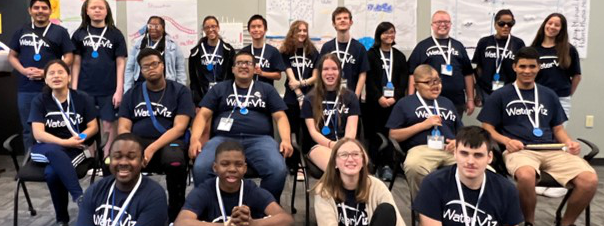
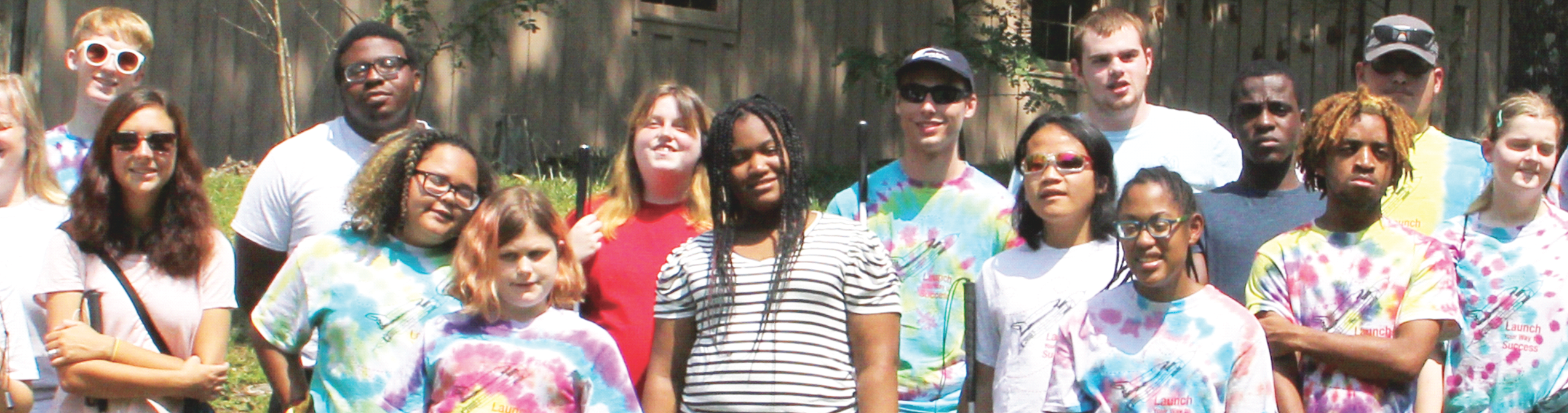
Landon Bryson is a longtime consumer with South Carolina Commission for the Blind. He began receiving services in 5th grade, when SCCB provided JAWS software and a QBraille Display to assist him with completing his schoolwork. Landon is a rising sophomore in high school and writes a weekly blog called Landon’s Light for the school paper, where he wrote about his experience attending SCCB’s Summer Teen program:

Summer School

Now Hear This

SC Assistive Technology Expo

Visit the SC Assistive Technology Expo for a full day of exhibits and workshops showcasing assistive technology for people with a wide range of disabilities.

Date: March 25, 2025

Time: 8:30 a.m.-4:00 p.m.

Place: Columbia Metropolitan Convention Center, 1101 Lincoln Street, Columbia, SC 29201 (Map)

Target Audience: People with disabilities, their families, seniors, educators, veterans and health care professionals.

Cost: Free

For complete SC AT Expo information, including how to register, please visit the event website.

Event Information: Flyer | Sponsor and Exhibitor Information

The Assistive Technology Expo is an annual event hosted by the South Carolina Assistive Technology Program, part of the Center for Disability Resources, University of South Carolina School of Medicine in Columbia.
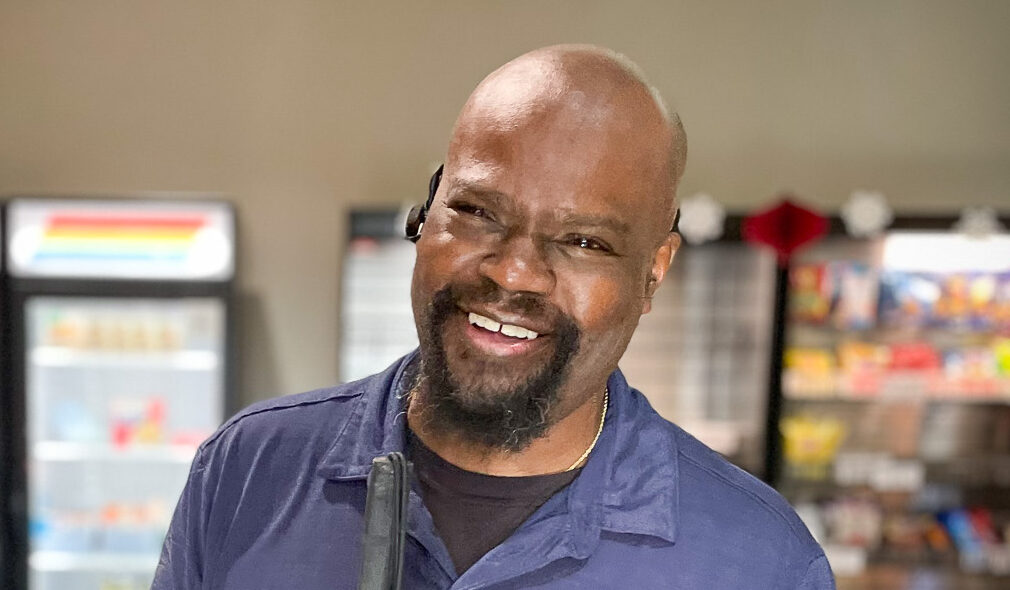
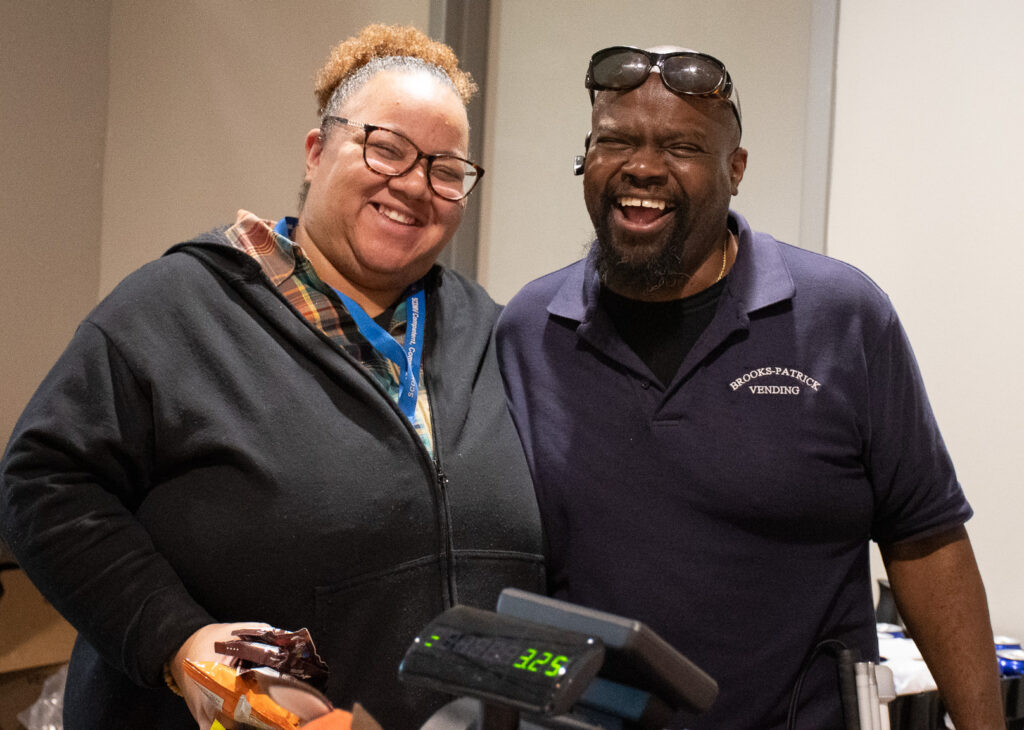
‘I’m blessed’: Beloved SCDPS vending operator lost his vision at age 47—but found much more in years since

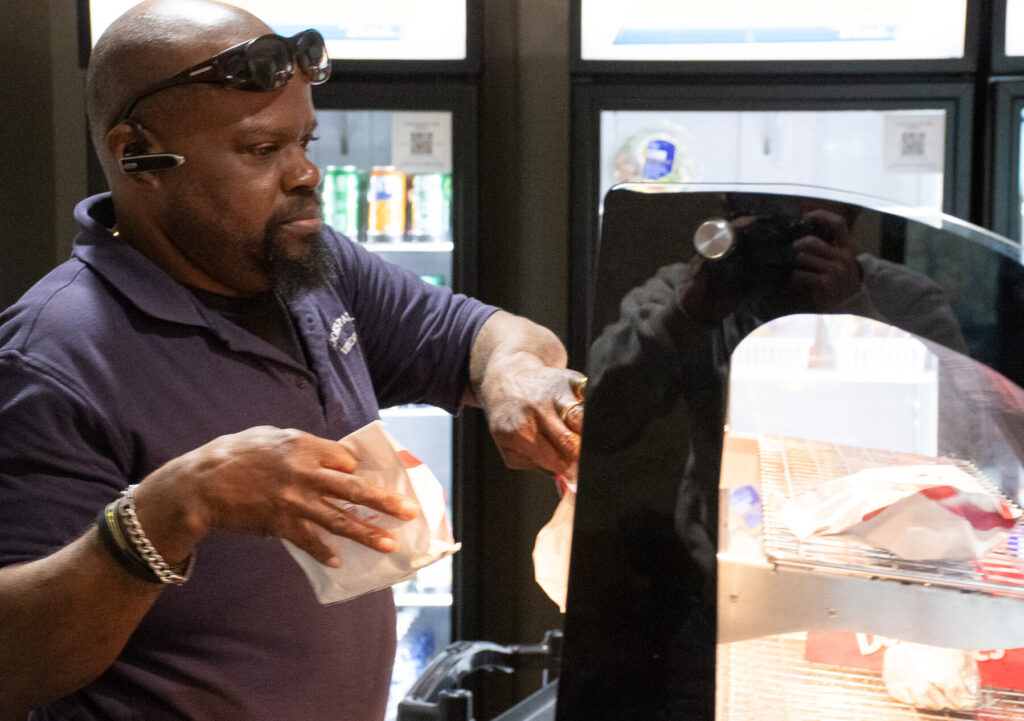
After losing his vision in 2018 at the age of 47, Willie Patrick could have wallowed in self-pity and waited for someone to come along and help him. But recognizing that he had a wife and three kids to provide for, Patrick decided to help himself, and now operates a vending facility serving the headquarters of two South Carolina state agencies.

“I thought, ‘Why me? Why not the next person? What did I do?’” Patrick recalled of losing his vision in 2018 to diabetic retinopathy. “As time passed, I realized that my life had changed, and I had to accept that. Even if it’s temporary, I have to accept it right now and make the best of it.”

The anger, grief, and isolation he experienced after losing his vision are now distant memories for Patrick, who says he is doing even better today than before he lost his vision. When he came to the SC Commission for the Blind (SCCB), it was determined that Patrick was a good match for their Business Enterprise Program, which trains people who are blind or low vision to operate their own vending business. Today, he operates The Market, a facility serving the Blythewood headquarters of the SC Department of Public Safety and the SC Department of Motor Vehicles (SCDMV).

“To do what you enjoy doing — for me, that’s success,” Patrick said one weekday morning as a steady line of customers left his store with their purchases. “Some people take time off, but when I’m here, it’s like I’m going on vacation. I enjoy coming here every single day.”

Patrick is one of 61 licensed vendors currently operating 83 vending facilities across the state, according to Ryan Skinner, Business Enterprise Program Director. The program is made possible by the Randolph-Sheppard Act, which was enacted by Congress in 1936 and gives preference to people who are legally blind for the operation of vending and concession services on government properties.

One of the core principles of the program is that it trains eligible individuals who are blind and low vision with the skills they need to engage in full-time work and earn a livable income, said Skinner. Individuals who successfully complete the BEP training may be awarded a stand (if available). SCCB then helps the vendor outfit their stand with any needed equipment and provide an initial inventory and supply.

“The goal is that these individuals earn remunerative income that gives them financial independence,” Skinner said. “Once they start generating profit from the setup cost that we cover and are successfully running the business, the profits are all theirs.”

While SCCB trains these entrepreneurs on the ins and outs of running a business, some traits they may already possess.

“Willie is very smart,” Skinner said. “He’s likable, respectful, and polite. He provides great customer service, which is one of the most important qualities to have when running a successful business.”

Patrick’s customer service experience preceded the loss of his sight: He spent 20 years working in fast food management and carried that customer service philosophy to his new career.

“If you choose to come in here, you deserve the best service,” he said about The Market. “When people come through that door, I want this to be a place where they can forget about the stresses of work, even if it’s just for a few minutes.”

Since opening The Market in January 2024, Patrick has added a variety of products to his inventory, which now includes premade sandwiches and salads, microwavable lunch items, candy, snacks, and cold drinks. He also has breakfast biscuits from local restaurants, and recently added a coffee machine, which customers can use to create a custom coffee, tea, or espresso beverage.

In the process of adjusting to his new way of life and becoming a business owner, Patrick said he has picked up some new skills — and some new ways of doing things that sighted people might take for granted. Some devices and software help with counting money or inventory. An app called Be My Eyes connects a user who is blind or low vision with a volunteer via video chat to help the user read a label, locate an object, or navigate an unfamiliar area.

While Patrick is indeed a success story, he says there is more progress to be made. Only 44 percent of people who are blind or low vision are employed, compared with 79 percent of those without disabilities, according to statistics from the American Foundation for the Blind.

“A lot of jobs are repetitive — any blind person can do it,” Patrick said. “But people assume we’re going to be a liability instead of an asset, so they don’t take a chance on us. How can we move forward if we’re not given a chance?”

As with any endeavor in life, running a business has its inevitable mistakes and losses. Patrick said that is the most difficult thing about being a business owner. But, as with learning how to walk after losing his sight, he says it all begins with taking the first step.

“It’s trial and error, and you can’t beat yourself up about it,” he said. “I treat The Market just like everything else. You can’t be afraid to make a move, because then you won’t go anywhere. Once you take that step, it may work or it may not. But you have to go for it.”

A smiling customer stands next to Willie Patrick in The Market.
Willie Patrick, blind licensed vendor, at The Market.

Written by SCDPS Staff Member Teddy Kulmala

Story originally posted by South Carolina Department of Public Safety as part of their #FeatureFriday

White Cane Safety Walk Followed by Lunch and Learn

The National Federation of the Blind of South Carolina will host a White Cane Safety Walk in recognition of White Cane Awareness Day on October 15. The Walk will begin at 9:30 am at the Federation Center on South Kilbourne Road in Columbia. Following the Walk, at the Federation Center a proclamation will be read about White Cane Awareness Day, and guest speakers will reflect on the history of white cane laws. Lunch will be offered afterward.

SCCB staff will have a display different types of canes and share how they may be used.

For information about attending this event, contact the National Federation of the Blind of South Carolina at (803) 254-3777.

When: October 15, 9:30 am – 1 pm

Where: 119 S Kilbourne Rd, Columbia, SC 29205

White Cane Awareness Day in Myrtle Beach

White Cane Awareness Day is October 15, a date is set aside to celebrate the achievements of people who are blind or low vision and the symbol of blindness and tool of independence that many of them use: the white cane. 

Join SCCB staff and other attendees to walk the trail around the ponds (the walk is about one mile). There will be demonstrations of how to use a white cane and vision simulators available for attendees to experience different types of visual impairments.

Yoga classes for kids and adults will be offered, with the option of wearing a blind fold for the “Yoga in the Dark” experience, by Foundation for Fighting Blindness staff.

Thanks to Association for the Blind and Visually Impaired South Carolina and Foundation for Fighting Blindness for assisting with this event!

When: October 15, 9 am – 12 pm

Where: Grand Park, 1119 Farrow Parkway, Myrtle Beach, SC 29577